US Economy Unexpectedly Lost 23,000 Jobs in July, Challenging Fed
A surprise July payroll drop of 23,000 jobs rattles markets and raises fresh doubts about the Federal Reserve's rate-hike path.
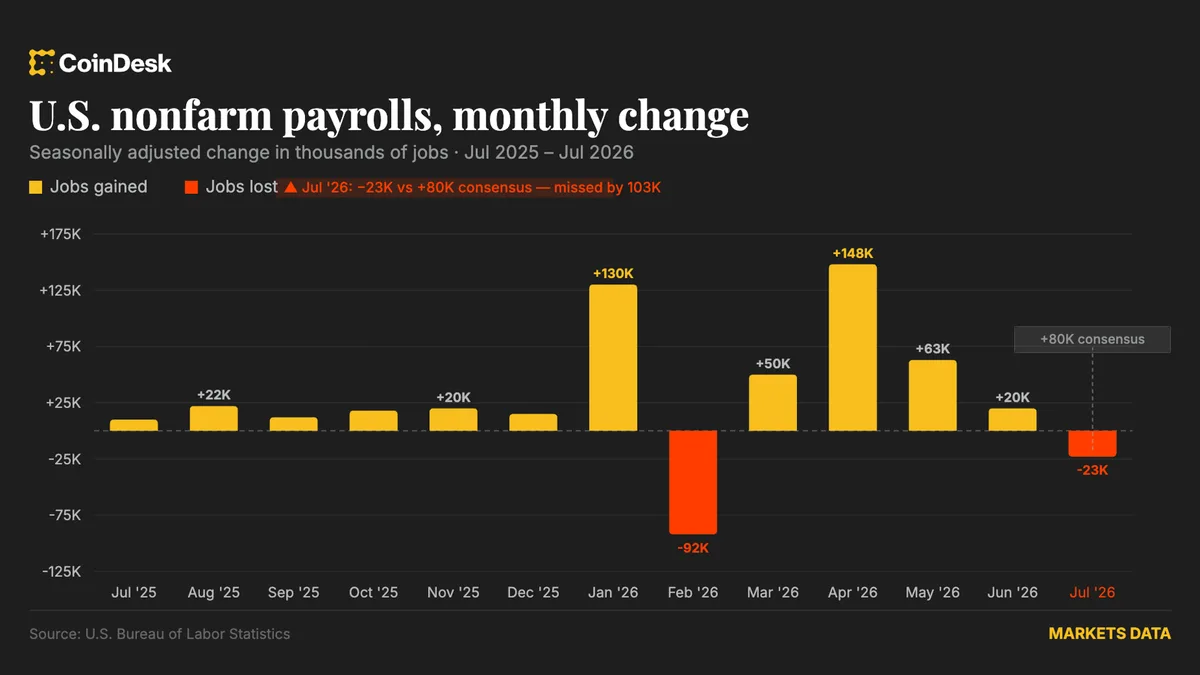
The United States economy shed an unexpected 23,000 jobs in July, a startling reversal that caught economists off guard and immediately cast doubt on the Federal Reserve's plans to continue raising interest rates, according to new data reported by CoinDesk.
The surprise contraction in payrolls marks a significant shift in the labor market narrative that has dominated Fed policy discussions throughout 2023. Officials at the central bank had pointed to persistent job growth as justification for keeping monetary policy restrictive, but a month of outright job losses undermines that argument in a meaningful way.
Read more US Economy Shed 23,000 Jobs in July, Defying Forecasts →
Market participants moved quickly to reassess the probability of further rate hikes following the release. When employment data turns negative, it signals that higher borrowing costs may already be biting harder into business activity than policymakers had anticipated, raising the stakes for the Fed's next policy meeting.
The report adds to a growing body of mixed economic signals — including moderating inflation and slowing consumer spending — that complicate the Fed's dual mandate of stable prices and maximum employment. A single month of losses does not confirm a trend, but it gives Fed critics fresh ammunition to argue that additional tightening risks tipping the economy into recession.
Continue reading at CoinDesk.