South Korea's Kospi Enters Bull Market Territory on AI Trade Surge
The Kospi benchmark index swung from bear to bull market in just over a month, fueled by artificial intelligence investment momentum.
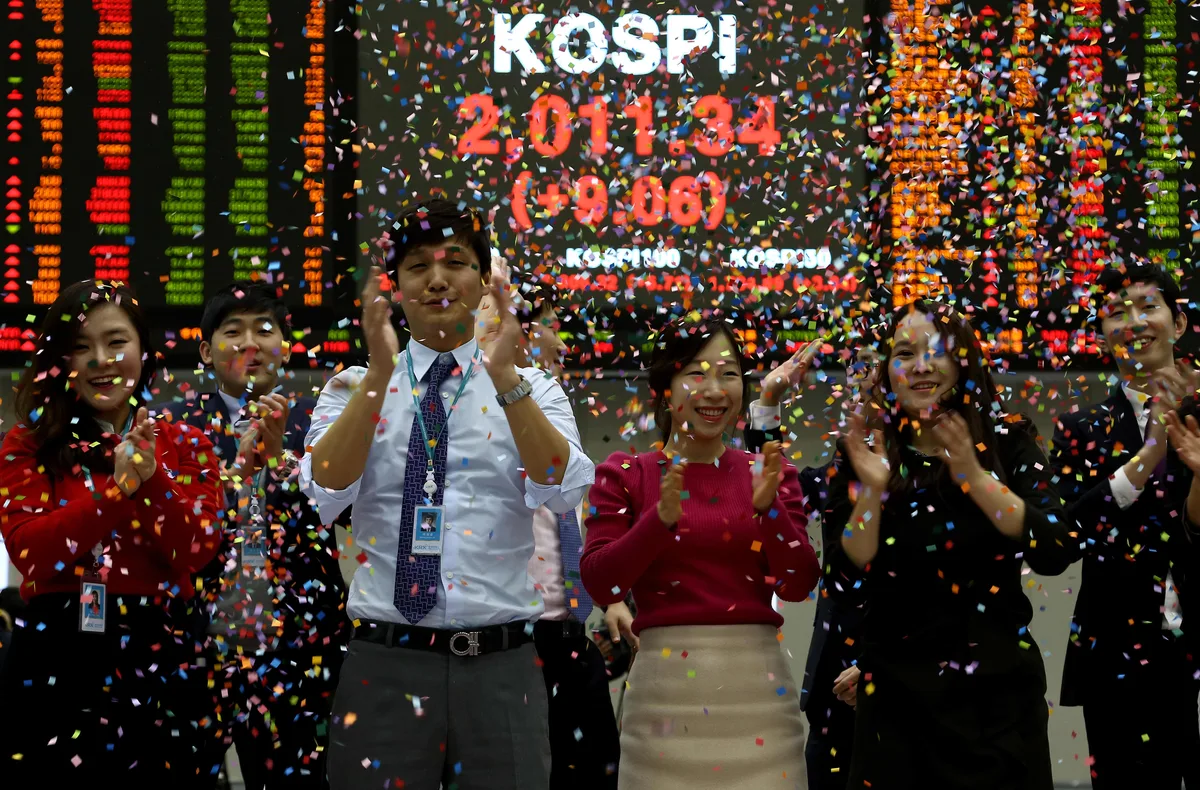
South Korean stocks surged Thursday, lifting the benchmark Kospi index into official bull market territory — a dramatic reversal that unfolded in just over a month after the index had been mired in a bear market. The swift turnaround underscores how rapidly sentiment can shift when a powerful investment theme takes hold.
The rally has been broadly attributed to the global artificial intelligence trade, which has injected fresh capital into technology-heavy markets across Asia. South Korea, home to major chipmakers and electronics manufacturers that sit squarely in the AI supply chain, is particularly well-positioned to benefit when investor appetite for AI-linked assets heats up.
Read more Why Global Funds Are Rushing to India's GIFT City Hub →
The speed of the Kospi's recovery — swinging from bear to bull market in barely five weeks — is a striking illustration of the volatility gripping global equity markets in 2025. Bear market territory is conventionally defined as a decline of 20% or more from a recent peak, while a bull market is marked by a 20% rise from a trough, meaning the index covered substantial ground in a compressed timeframe.
Analysts will likely watch whether the rally has durable legs or whether it reflects a sentiment-driven overshoot that could leave latecoming investors exposed if AI enthusiasm cools or broader macroeconomic headwinds reassert themselves. South Korea's export-dependent economy adds another layer of sensitivity to global trade conditions and currency movements that could influence the market's next direction.
Continue reading at US Top News and Analysis