South Korea's Kospi Drops Into Bear Market After 5% Single-Day Plunge
The Kospi tumbled more than 5% Wednesday, falling 20% below its June peak and officially entering bear market territory.
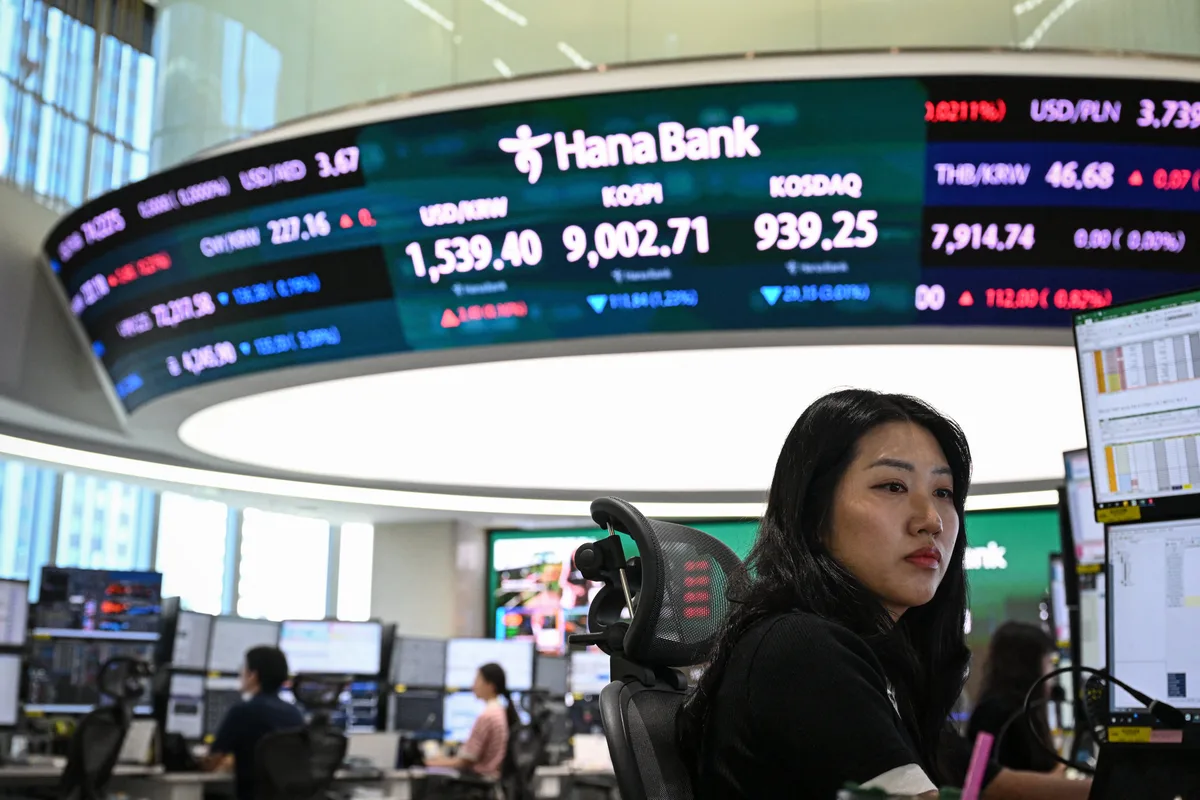
South Korea's Kospi index plunged more than 5% on Wednesday, dragging the benchmark — which had been the world's best-performing major stock market earlier this year — into official bear market territory, according to data from LSEG. The single-day selloff was severe enough to push the index a full 20% below the record high it set on June 19, crossing the threshold that markets broadly define as a bear market.
The speed of the reversal is striking. A market celebrated just months ago as a global outperformer has now surrendered enough ground to rank among the year's sharper major-index declines. Bear market designations matter to institutional investors because they often trigger risk-management rules, portfolio rebalancing, and shifts in sentiment that can accelerate selling pressure.
Read more Cramer Holds Salesforce Despite KeyBanc Downgrade →
While the source data does not specify the precise catalysts behind Wednesday's drop, the magnitude of the move — one of the steepest single-session losses for the index — suggests broad-based liquidation rather than sector-specific stress. Analysts watching Asian equity markets will likely scrutinize currency moves, foreign investor flows, and any macro or geopolitical triggers that may have compounded domestic selling.
The Kospi's dramatic turn from leader to laggard underscores how quickly momentum can reverse in emerging-market equities, where foreign capital flows and export-driven earnings can amplify both rallies and retreats. Investors tracking global allocations will be watching whether the index finds technical support or whether the bear market designation ushers in a prolonged period of risk aversion.
Continue reading at US Top News and Analysis.