Bitcoin Now Less Volatile Than South Korean Stocks Amid AI Slowdown
As AI-driven market euphoria fades, bitcoin's price swings have calmed below those of South Korean equities, marking a rare volatility shift.
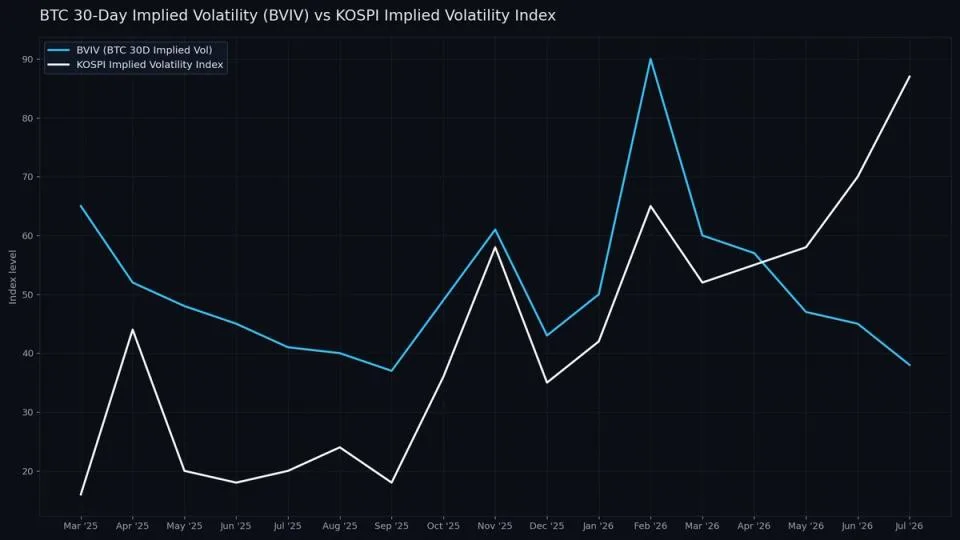
Bitcoin, long synonymous with wild price swings, has quietly become a steadier asset than South Korean stocks as the artificial intelligence investment frenzy that turbocharged global markets begins to lose momentum, according to a report from CoinDesk. The shift marks a notable reversal in how traders and analysts are categorizing crypto risk relative to traditional equity markets in Asia.
The cooling of AI-sector enthusiasm has redirected speculative capital and dampened the high-octane volatility that characterized both tech-heavy equity indexes and digital assets over the past two years. South Korean stocks, heavily weighted toward semiconductor and AI-adjacent companies, have absorbed much of that turbulence as investor sentiment toward the sector recalibrates.
Read more Apple, JPMorgan, ExxonMobil: Key Stock Outlooks Today →
For bitcoin, the relative calm represents a maturation signal that crypto advocates have long anticipated. Institutional adoption, broader market liquidity, and a more diversified investor base have all been cited as structural factors that could explain why the world's largest cryptocurrency is exhibiting lower volatility than once-staid equity markets in developed Asian economies.
The comparison carries real implications for portfolio managers weighing bitcoin as a diversification tool. If the asset continues to trade with less turbulence than certain foreign equity indexes, the traditional argument against including it in conservative or balanced portfolios becomes harder to sustain. Analysts will be watching whether the trend holds as macroeconomic conditions and AI investment cycles continue to evolve.
Continue reading at CoinDesk.