AMD vs. Navitas Semiconductor: AI Revenue Trends Compared
A side-by-side look at AMD and Navitas Semiconductor quarterly revenue trends reveals key signals for AI investors.
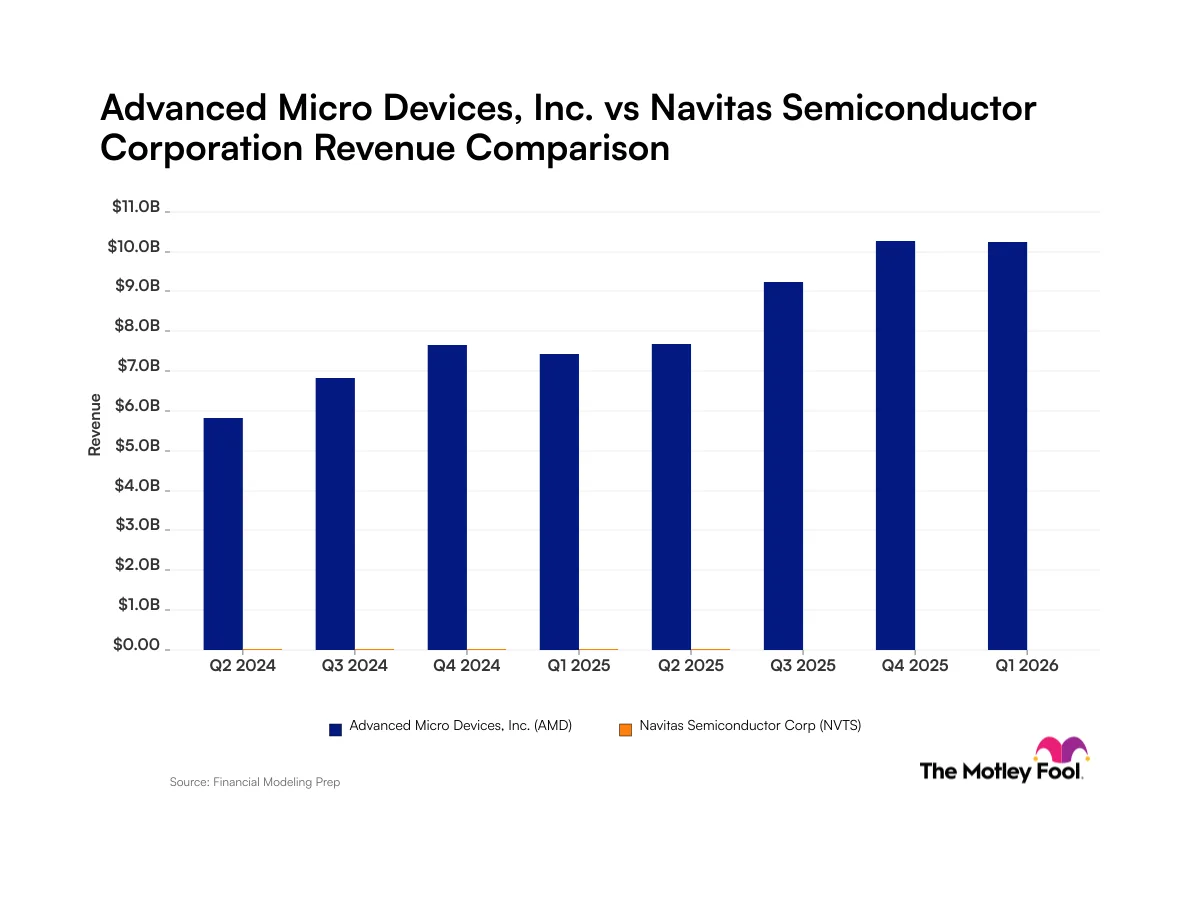
Two artificial intelligence chipmakers — Advanced Micro Devices and Navitas Semiconductor — are drawing investor scrutiny as the race to dominate AI hardware infrastructure intensifies, with quarterly revenue trends offering a window into each company's competitive positioning and growth trajectory.
AMD has emerged as one of the primary challengers to Nvidia in the data center GPU market, steadily expanding its AI-focused product lineup while reporting revenue figures that reflect growing enterprise adoption of its accelerator chips. Navitas Semiconductor, by contrast, operates in a different but complementary segment of the AI supply chain, focusing on next-generation power semiconductors that enable more efficient energy delivery in AI data centers and edge devices.
Read more Gulf Stock Markets Fall as US-Iran Tensions Escalate →
Comparing the two companies' quarterly revenue patterns illustrates the broader dynamics shaping the AI chip ecosystem: large incumbents like AMD benefit from scale and brand recognition, while smaller specialists like Navitas compete on the promise of efficiency gains that become increasingly critical as AI workloads consume ever-larger amounts of power. Investors tracking both firms are essentially weighing the upside of platform-scale growth against the asymmetric potential of a niche technology provider.
The divergence in revenue scale between the two companies is significant, but so is the growth rate narrative each tells. Rapid sequential revenue gains at a smaller firm like Navitas can signal early-stage market penetration, whereas AMD's trajectory speaks to mainstream enterprise adoption — two very different but potentially rewarding investment stories depending on an investor's risk tolerance and time horizon.
Continue reading at Yahoo Finance.